CATH LAB STUDIES AND CARE PATHWAY

Understand what a cath lab study is, when it is used, and how it differs from other heart testing.

This page focuses on diagnostic cath lab studies such as coronary angiography, left-heart catheterization, right-heart catheterization, hemodynamic testing, and related vascular studies. It also points you to the imaging and outpatient procedure pages so you can tell which service actually matches your question.

This page: diagnostic cath lab studiesImaging page: echo, CT, stress tests, monitorsProcedure page: outpatient cath lab services
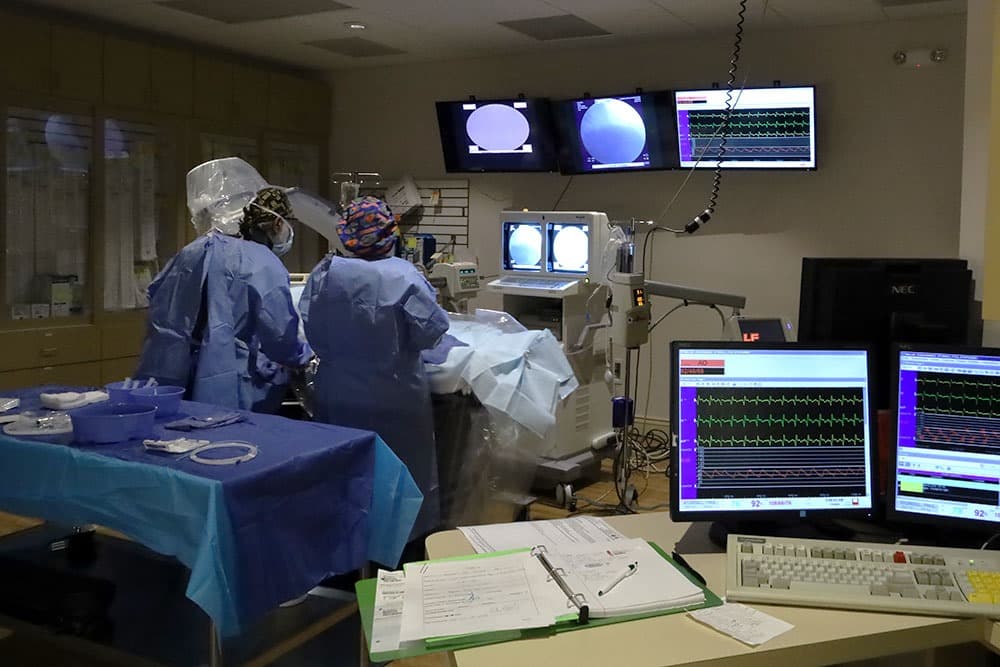
Cath lab study and cardiac catheterization setting

What this page covers

Diagnostic cath lab studies live here. Non-invasive imaging and outpatient procedures are linked separately so patients do not have to guess which page they should read.

Start Here

Three topics were getting mixed together on this page

Patients usually come here with one of three questions: what a cath lab study is, whether another imaging test might come first, or whether they are already talking about a procedure. Use the guide on the right so you can go straight to the correct information.

Diagnostic cath lab studies

Use this page if the goal is to understand direct catheter-based studies that answer questions about coronary arteries, blood flow, or heart pressures.

  • Coronary angiogram
  • Left-heart catheterization
  • Right-heart catheterization
  • IVUS and vascular angiography
Jump to study list

Related imaging and monitoring

Go to the imaging page if you are comparing non-invasive testing that may come before or after cath lab decision-making.

  • Echocardiograms
  • Cardiac CT and CTA
  • Stress testing
  • Holter monitors and PET imaging
View imaging page

Procedures and interventions

Use the outpatient cath lab page if your question is mainly about procedures, interventions, or hospital-based cardiovascular services.

  • Angioplasty and stenting
  • Thrombectomy
  • Device procedures
  • Hospital-based services
View procedure page
Emergency warning

Call 911 right away for severe chest pain or pressure, severe trouble breathing, fainting, sudden weakness or numbness, trouble speaking, or anything rapidly worsening. A scheduled cath lab study is not a substitute for emergency evaluation.

Call 911

Why A Cath Lab Study May Be Ordered

The goal is usually to answer a direct clinical question

A diagnostic cath lab study is usually recommended when symptoms, prior testing, or clinical risk still leave an important question unresolved.

Study coronary blood flow directly

Cath lab studies can help show whether narrowing or blockage in the coronary arteries may be affecting blood flow to the heart.

Measure pressures and circulation

Catheter-based studies may be used to measure pressures, oxygen levels, and flow patterns when symptoms need more direct explanation.

Turn study results into a plan

Findings can guide the next decision, which may be medication changes, further testing, monitoring, or an interventional procedure when appropriate.
Tests We Perform Here

Detailed diagnostic cath lab studies and vascular evaluations

Everything below is part of the direct catheter-based study list. If your question is about non-invasive imaging or outpatient procedures, use the pages linked above instead.

Coronary and cardiac catheterization studies

These are the core cath lab studies used to directly evaluate coronary anatomy, blood flow, and heart pressures.

Coronary angiography / coronary angiogram

A contrast-based imaging study used to look for narrowing or blockage in the coronary arteries.

Left-heart catheterization

A catheter-based study used to gather information about coronary anatomy, arterial circulation, and pressure-related questions on the left side of the heart.

Right-heart catheterization (RHC)

A study used to measure right-sided heart pressures and evaluate pulmonary circulation when symptoms need more direct explanation.

Pressure, flow, and hemodynamic studies

These studies focus on how blood, oxygen, and pressure are moving through the heart and circulation.

Hemodynamic pressure studies

Detailed pressure measurements that help explain congestion, strain, or circulation problems.

Oxygen saturation and flow assessment

Targeted measurements that help answer more specific questions about circulation and heart function.

Pulmonary artery angiography

A catheter-based angiographic study of the pulmonary arteries when clinically indicated.

Vascular angiography and related diagnostic studies

Some cath lab evaluations extend beyond the heart when vascular circulation needs direct imaging or intravascular study.

Carotid artery angiography

Direct imaging of the carotid arteries when closer vascular evaluation is needed.

Abdominal aortography and lower-extremity angiography

Catheter-based imaging used to study the abdominal aorta and blood flow to the legs.

CO2 angiography

A selected vascular imaging approach used in some renal or lower-extremity studies when clinically appropriate.

Intravascular ultrasound (IVUS)

Ultrasound performed from inside the vessel to provide a more detailed view of anatomy and narrowing.

Venous and iliac vein intravascular study

Used when venous circulation or iliac vein anatomy needs closer catheter-based evaluation.

Preparation

Study-day preparation should be clear before you arrive

Ask whether you should stop eating, drinking, or holding any medicines before the study.

Bring an updated medication list, including blood thinners, diabetes medicines, supplements, and allergies.

Tell your care team about kidney problems, prior contrast reactions, bleeding history, or any recent symptom change.

If you have already completed an echocardiogram, CT scan, stress test, vascular ultrasound, or monitor study, bring those reports or make sure the office has them available.

Arrange transportation if sedation or recovery monitoring means you should not drive afterward.

Bring your questions so you understand what study is planned, what it is meant to answer, and when results will be reviewed.

Sedation, access-site care, and discharge instructions vary by study type and clinical situation, so the office should review those details directly with you.

What the study can clarify

Diagnostic value is the main reason these studies are ordered

Whether the coronary arteries appear narrowed or blocked enough to explain symptoms or test results
Whether heart pressures suggest strain, congestion, or circulation problems that need closer attention
Whether prior echocardiogram, CT, PET, vascular ultrasound, or rhythm-monitor findings need direct cath lab correlation
Whether symptoms are better explained by anatomy, pressure, flow, or another part of the care plan
Whether medications, additional imaging, ongoing monitoring, or intervention should be considered next

A useful cath lab study does not always end with a procedure. Sometimes the most important outcome is simply a clearer and safer treatment decision.

When These Studies Are Discussed

Common reasons direct cath lab evaluation may be recommended

These are broad examples only. Your own recommendation should be tied to your symptoms, prior testing, and clinical risk.

Chest pain, abnormal stress testing, or other findings that suggest coronary artery disease needs more direct evaluation
Shortness of breath, fluid concerns, or complex symptoms where pressure measurements may clarify what is happening
Abnormal echocardiogram, cardiac CT, PET, vascular ultrasound, or rhythm-monitor findings that need clearer correlation
Situations where office evaluation and non-invasive imaging do not fully answer the most important clinical question
Pre-intervention planning when a direct catheter-based study is the clearest way to guide the next step

How Results Help

The study matters because it changes what happens next

The value of the study is not the test itself. The value is the treatment decision, follow-up plan, or reassurance that becomes clearer afterward.

Medication adjustment

Some study findings support medical management rather than a procedure, especially when the goal is better symptom control or risk reduction.

Additional monitoring or imaging

Results may show that the next best step is more follow-up, echocardiography, cardiac CT, vascular ultrasound, rhythm monitoring, PET-based imaging, or watching trends over time.

Intervention when appropriate

If the findings support it, the team may discuss angioplasty, stenting, or another procedure as part of the treatment plan.

Clearer clinical direction

Even when a study does not show a severe blockage, it can still be useful because it narrows the uncertainty and makes the next decision clearer.

FAQ

Questions patients often ask about cath lab studies

These answers are general education and should still be personalized with your own cardiology team.

What tests and studies can be done in the cath lab?

Common cath lab studies may include coronary angiography, left-heart catheterization, right-heart catheterization, hemodynamic pressure studies, pulmonary artery angiography, carotid angiography, abdominal aortography, lower-extremity angiography, CO2 angiography, and intravascular ultrasound when clinically appropriate.

Is the cath lab only for treatment, or is it also for studies?

It is used for both. Many cath lab visits are diagnostic studies ordered to better understand coronary anatomy, blood flow, or heart pressures before deciding on treatment.

How is this page different from the outpatient cath lab page?

This page is mainly about diagnostic cath lab studies and how they help answer a clinical question. The outpatient cath lab page is the better place to review procedures, interventions, and hospital-based cardiovascular services.

What if I am comparing cath lab studies with echo, CT, stress tests, or monitors?

Those tests are part of the broader imaging and monitoring pathway. This page explains direct catheter-based studies, while the in-office advanced imaging page is better for echocardiograms, stress testing, cardiac CT, vascular ultrasound, rhythm monitoring, and related non-invasive options.

What is the difference between a cath lab study and a stent procedure?

A study is focused on gathering information. A stent procedure is a treatment step. Some patients only need the study, while others may need treatment after the results are reviewed.

Why would I need a cath lab study after other heart tests?

A cath lab study may be recommended when office evaluation, echo, stress testing, or other imaging does not fully answer the main clinical question and more direct information is needed.

Should I wait for a scheduled cath lab study if my symptoms are severe?

No. Call 911 for severe chest pain or pressure, severe trouble breathing, fainting, stroke-like symptoms, or anything rapidly worsening. Emergency symptoms need immediate evaluation.

Next step

Need help understanding why this study, and not another test, is being recommended?

Bring your medication list, prior test results if available, and questions about what the study is meant to answer. Patients usually feel less overwhelmed once they understand what question the cath lab study is supposed to solve and what decision depends on it.